

Traditional Amish Cheese Making in Pennsylvania
Pennsylvania has a rich history in premium dairy production. Here at Swiss Villa, we are privileged to partner with Amish farmers throughout southeastern Pennsylvania. These small family-run farms are completely chemical, GMO and soy-free.
Check out this video to learn more about our cheese making process.
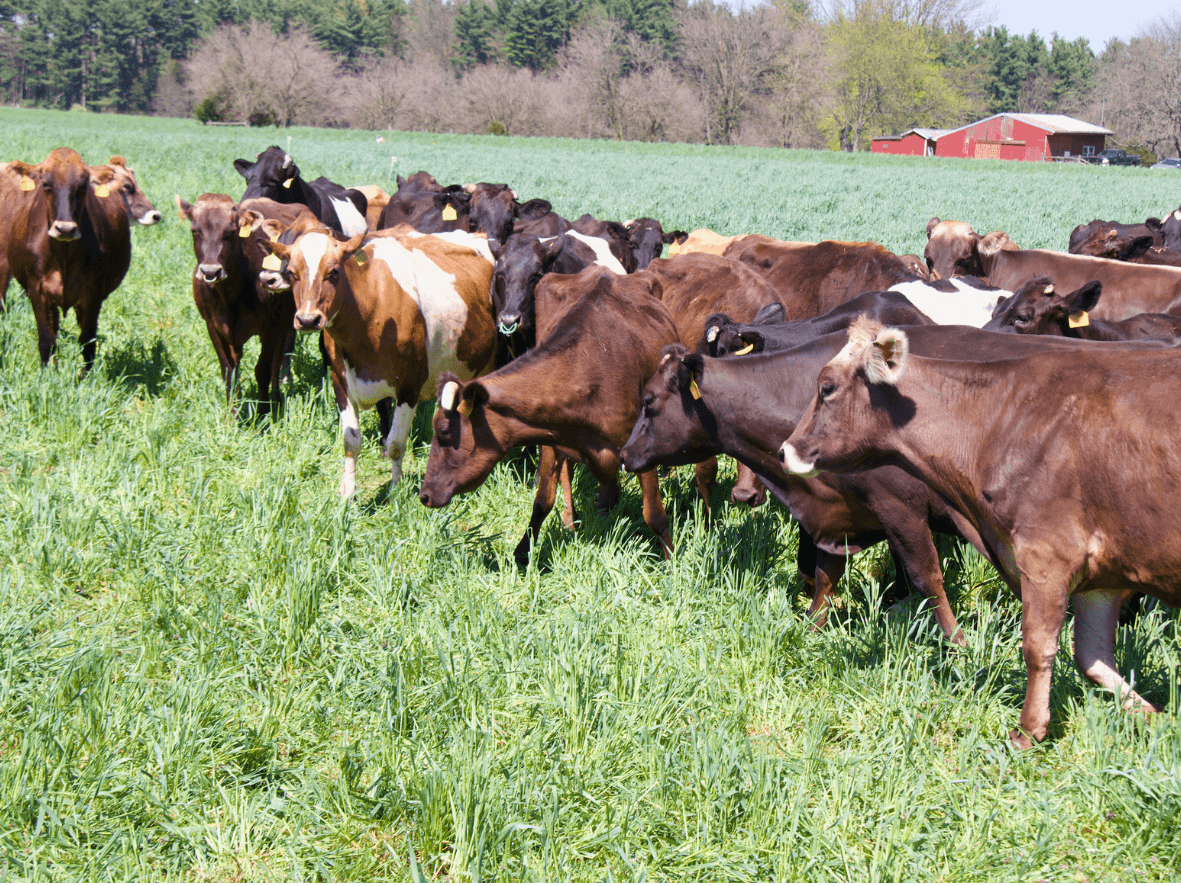
Our Traditional Heritage Grass-Fed A2/A2 Cows
Our cows are traditional heritage breeds and consume a 100% grass diet from rich Pennsylvania pastures and are certified A2/A2. Heritage breeds are special because of the A2 beta-casein protein that they carry. Most milk in the U.S. contains a blend of A1/A2 protein. However, the exclusive A2/A2 gene that our cows have makes the milk easier to digest and could be a great choice for some people who don’t respond well to regular milk. Our cows are fed 100% grass and zero grains. Grass-fed milk also means higher nutritional value, including vitamins B12 and D, and omega-3 fatty acids. Among other benefits, consuming grass-fed dairy supports the immune system and blood pressure.
Our Cheesemaking Process
Natural FermentationFirst, the milk is solidified by careful and natural fermentation of the raw cow milk in our small processing facility. Our milk is never heated above 102 degrees, keeping our cheese “raw.” The natural fermentation process provides some health benefits, including gut support, lowering inflammation and higher vitamin content.
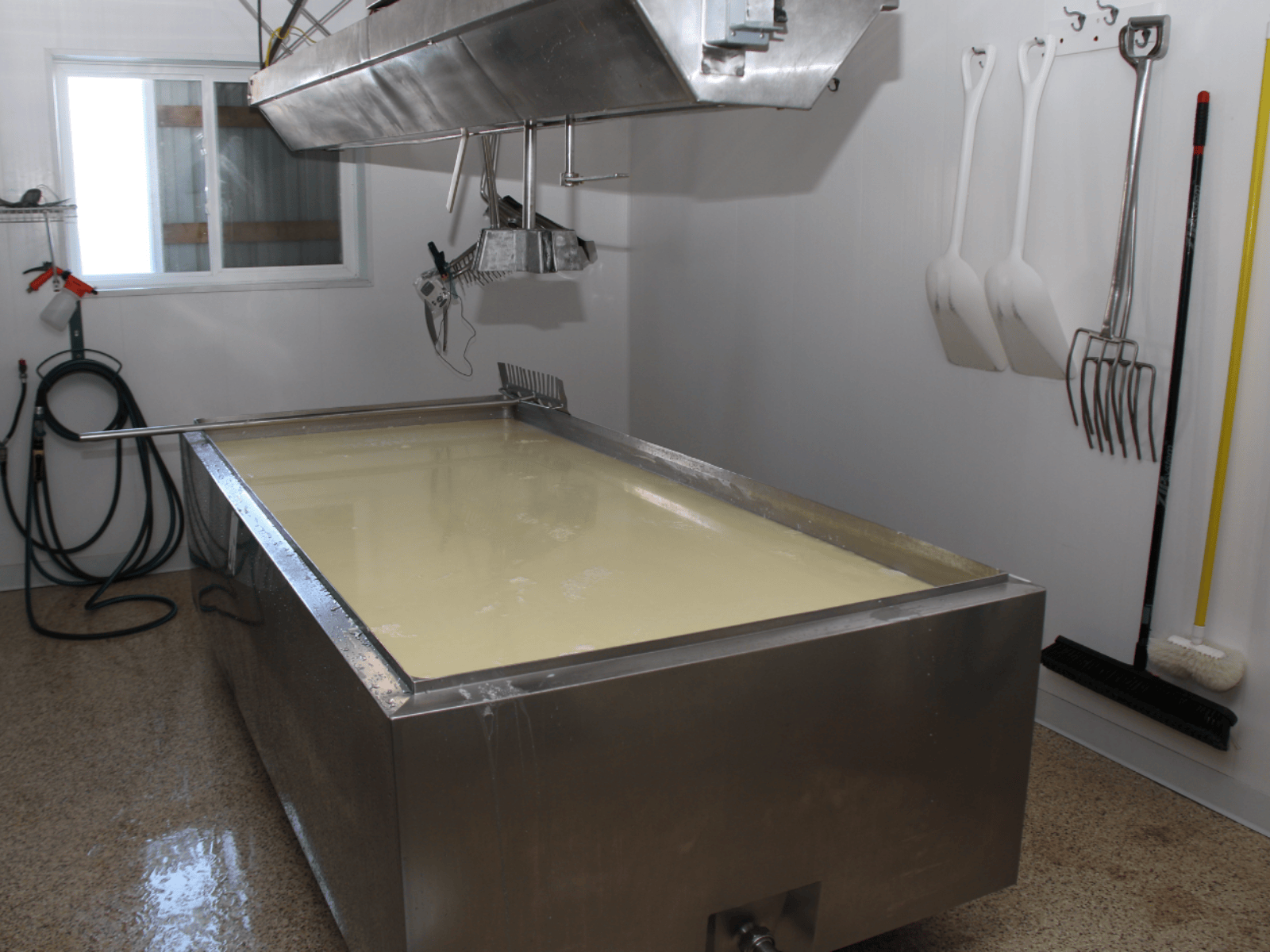
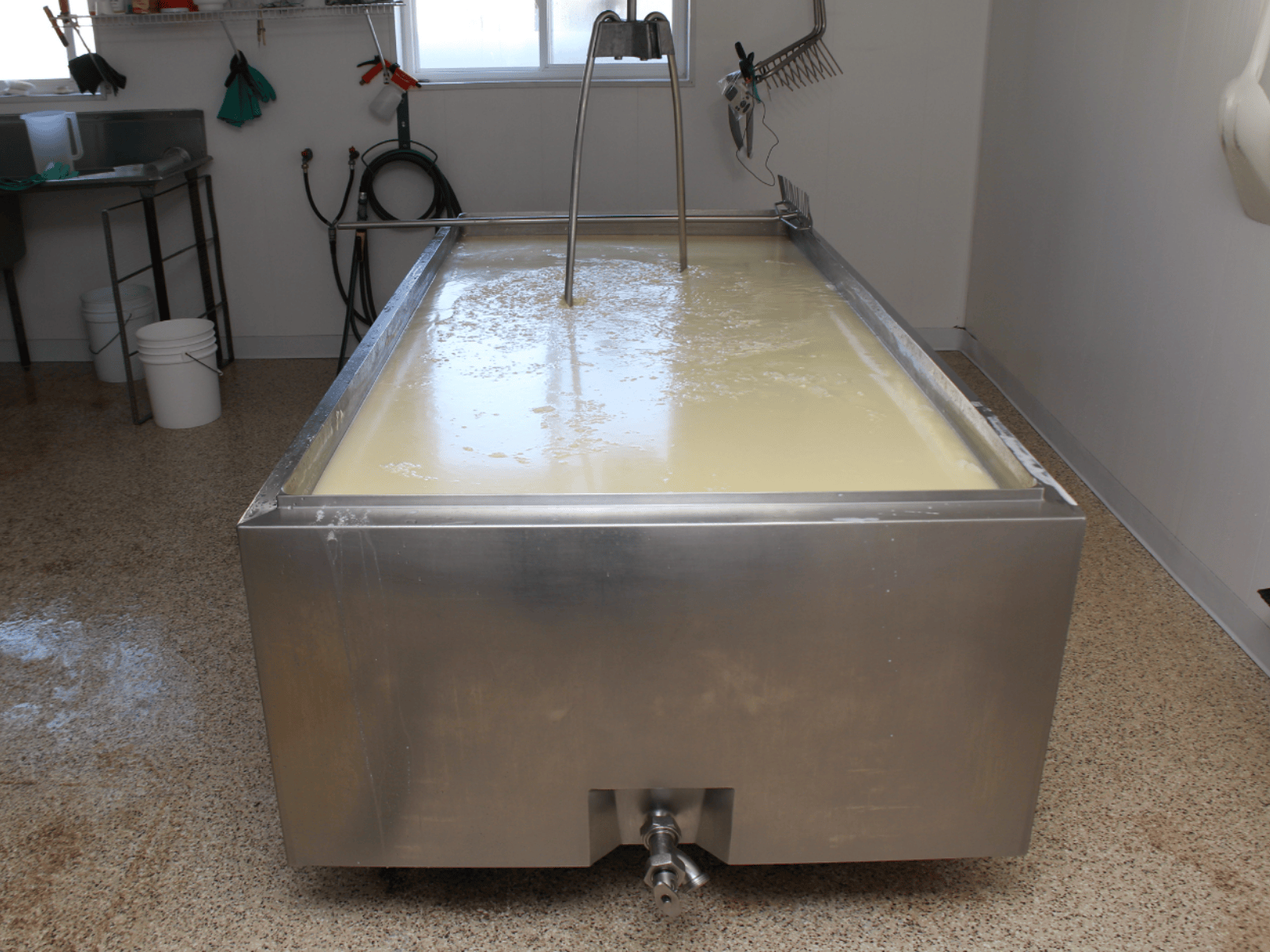
Add Animal RennetNext, we add animal rennet to help coagulate the milk and solidify the curds. This is the old-fashioned traditional way of making cheese, instead of using vegetable or microbial rennet used in a lot of cheesemaking today. The benefit of using animal rennet is the enzymes that promote natural fermentation and support our digestion in ways non-animal rennet cannot do. Animal rennet also increases the rich flavor and solid texture of the cheese.
Cut the CurdNext, we cut the solidified curd into small cubes so that it can begin to release excess water called “whey.” Whey is the liquid that forms during the cheese fermentation process. It is made up of over 90% water, with the remaining percent a combination of lactose, vitamins, minerals, proteins and tiny amounts of fat.
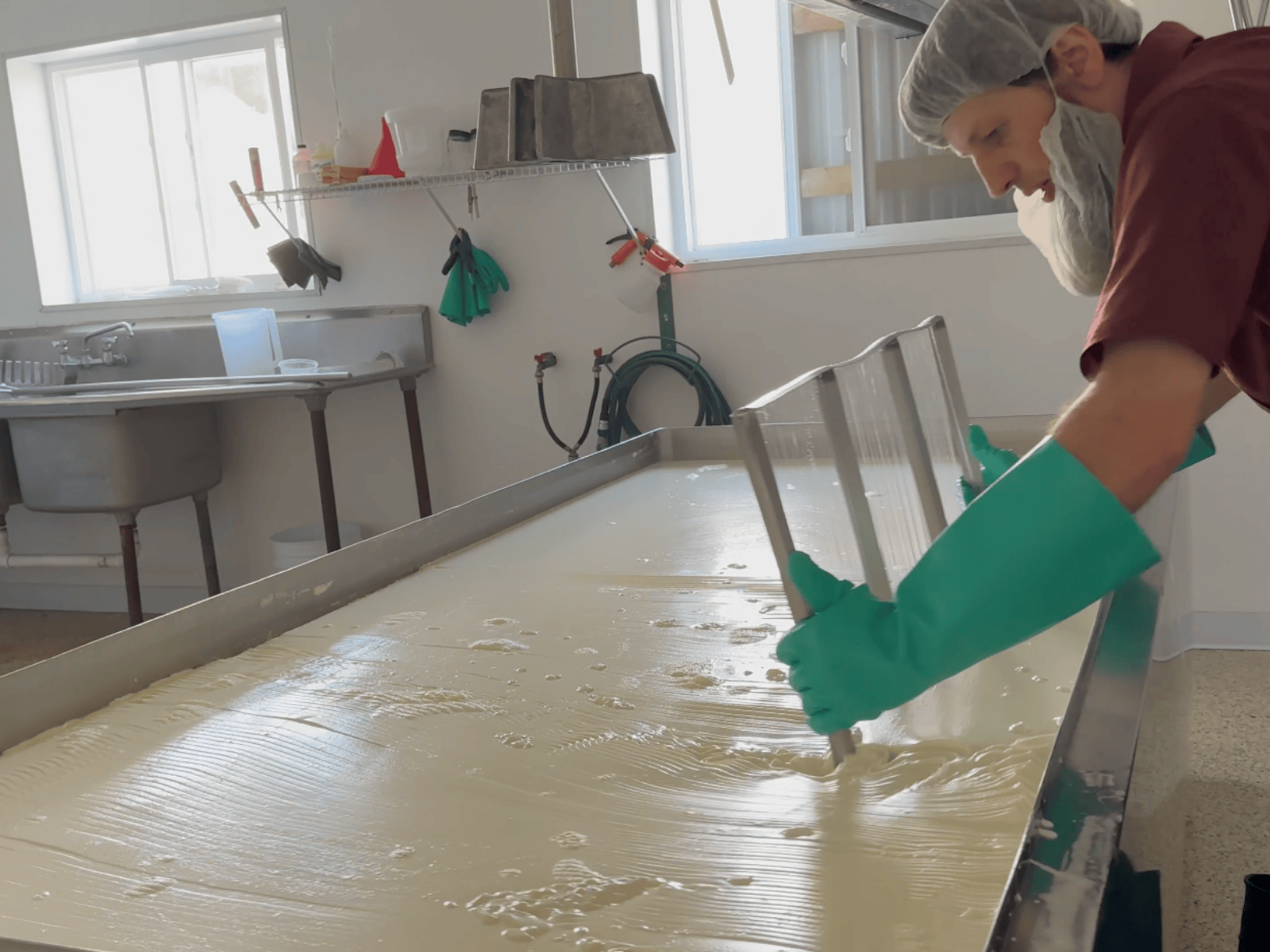
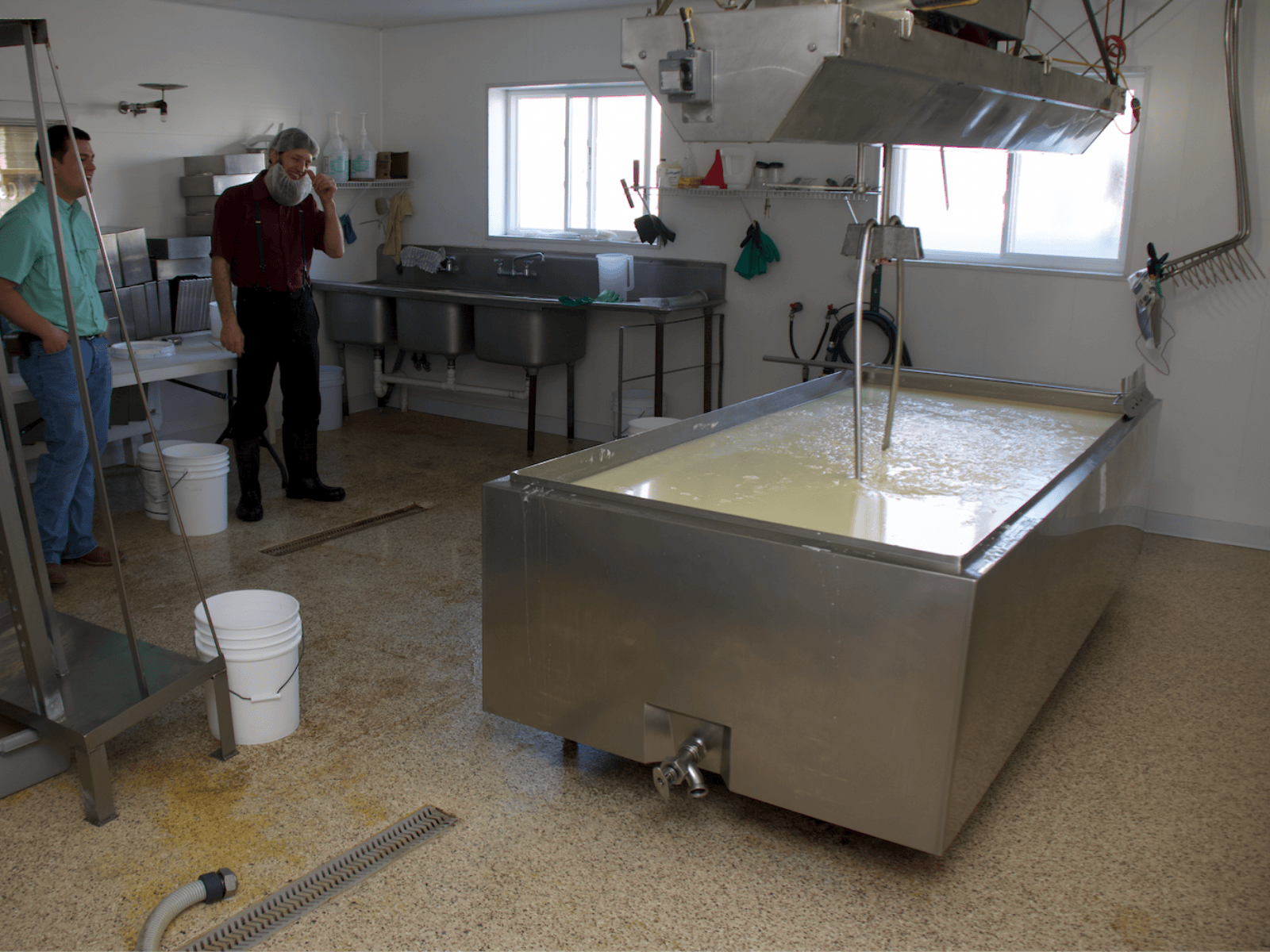
Stir the CurdAfter the curd is cut, we gently stir it so that it can continue releasing the whey. This is done using large agitators to bring about uniformity and consistency of the final product of cheese.
Remove the WheyNext, we drain all of the whey out of the vat and add in salt, and stir. Draining the whey removes excess moisture and helps the cheese to set. The addition of salt helps to preserve the cheese in its best state and keeps harmful bacteria away.
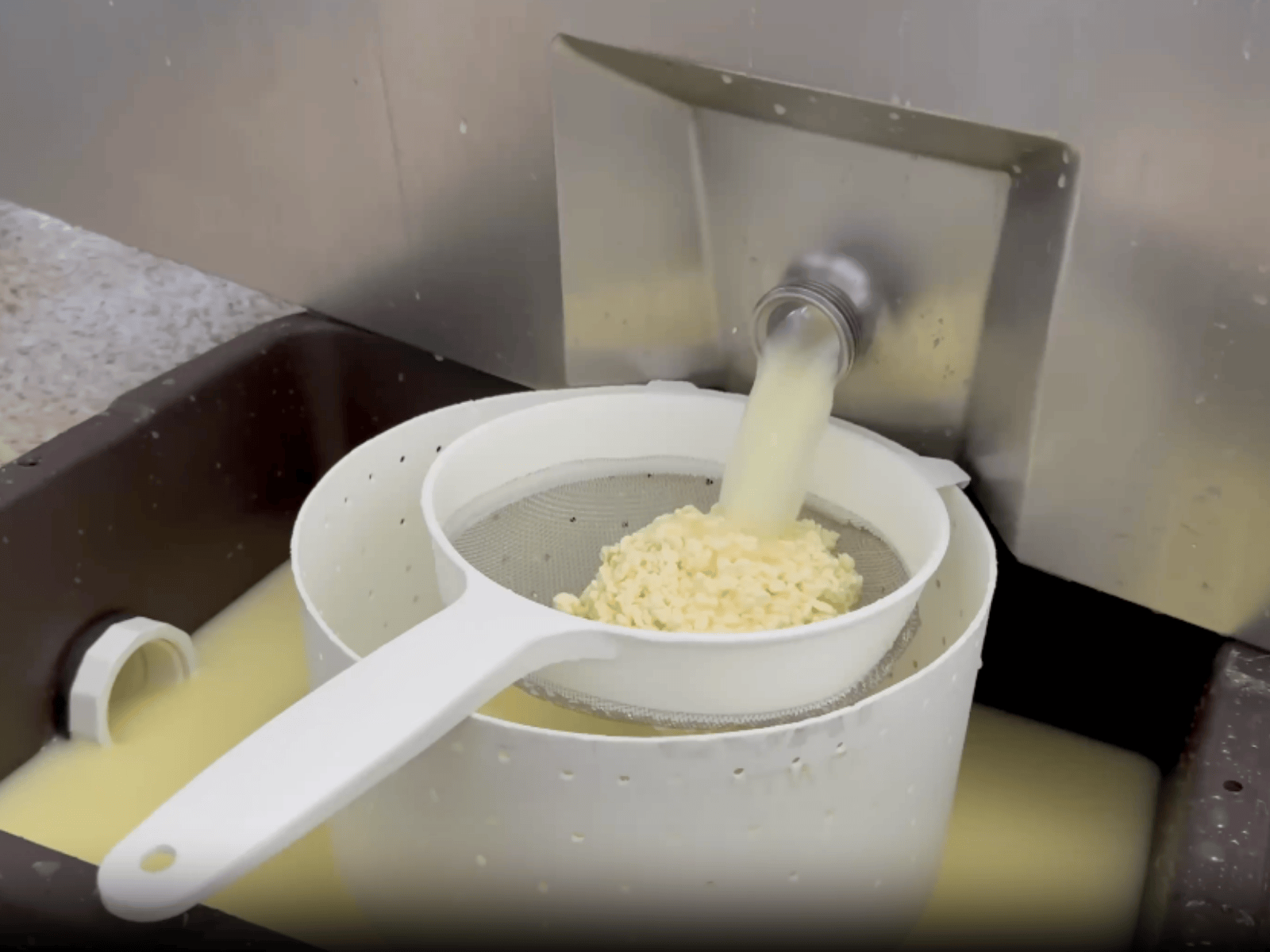
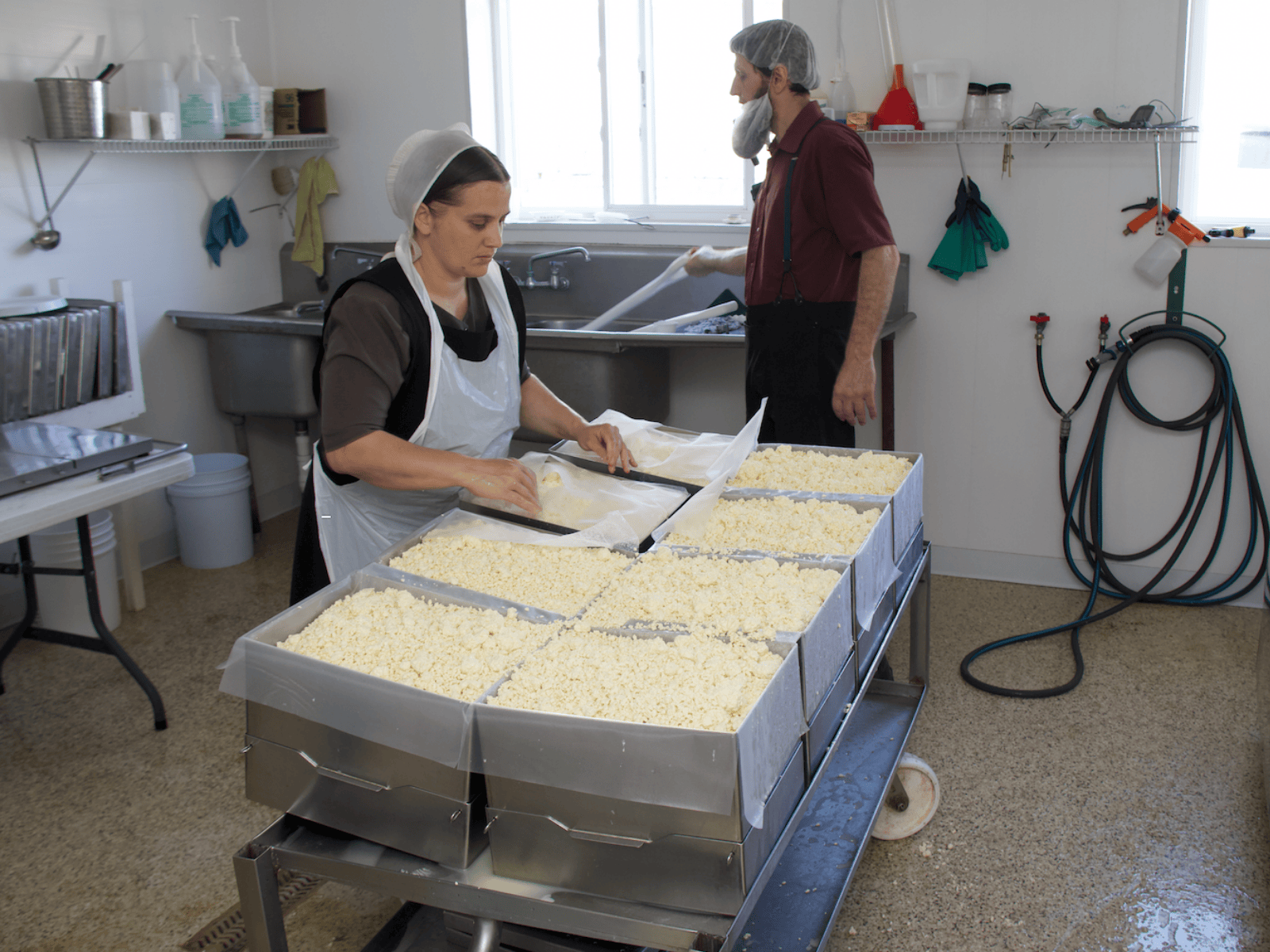
Place in Cheese MoldsAfter the curd has released sufficient whey, we scoop it out and place it in cheese molds. This step shapes the cheese into a consistent form, which helps it develop uniform flavor and mature evenly.
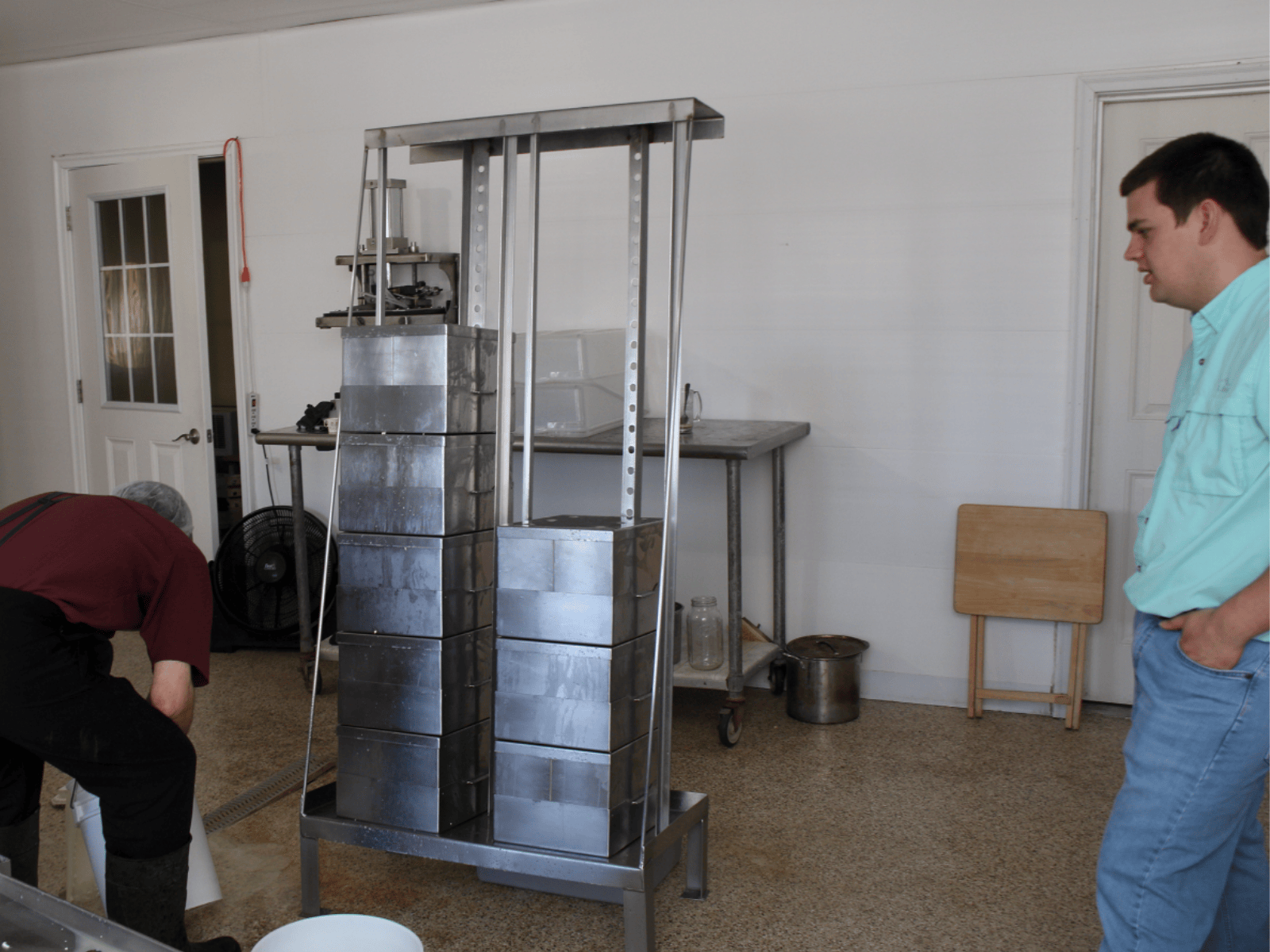
Press Down the CurdThe cheese molds get stacked so that the curd can press together. This action continues the important process of releasing whey, binding the curds together to form the cheese into its strong dense shape. This process also helps create a rind, which helps maintain moisture and protection against harmful bacteria.
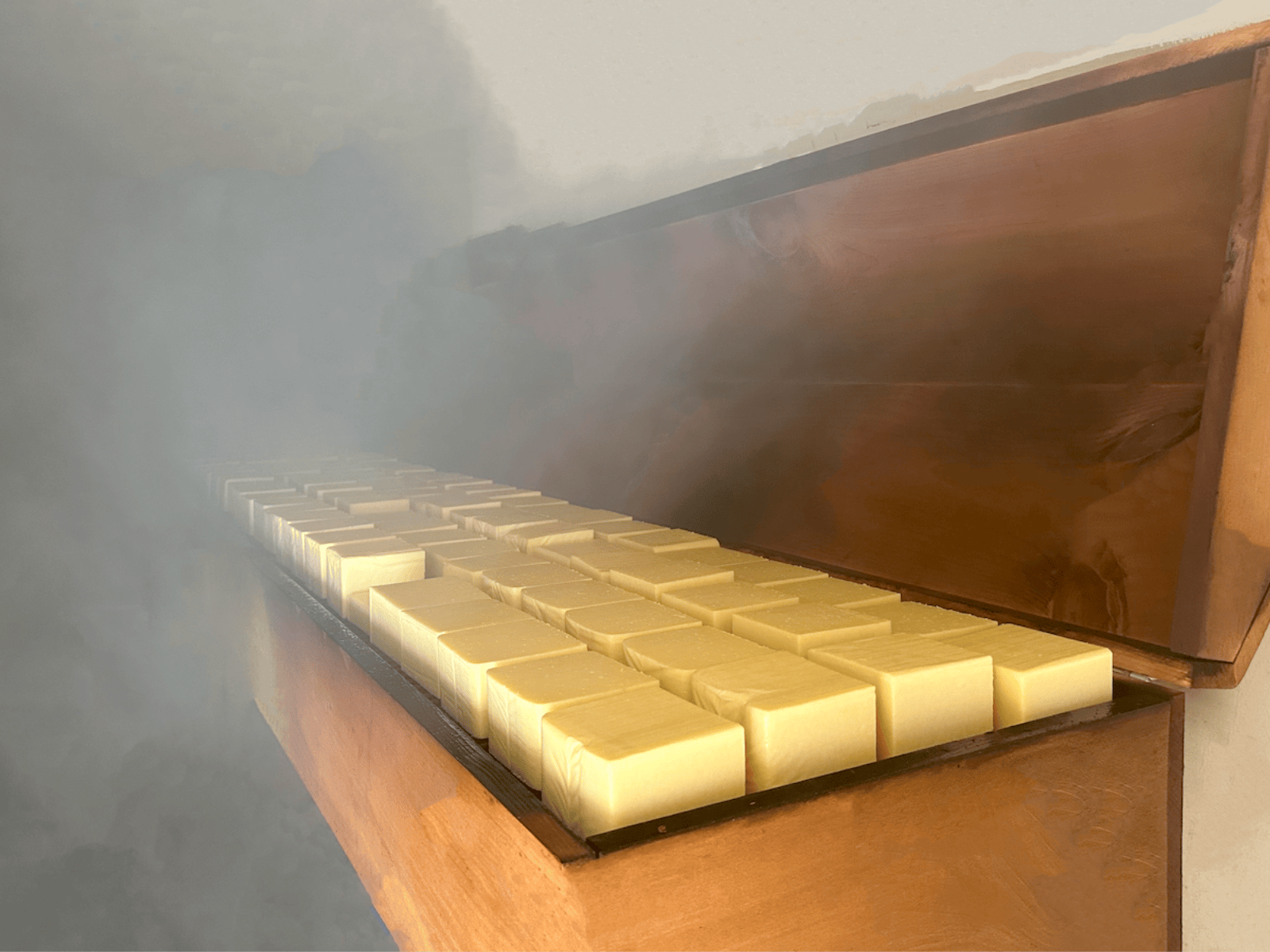
The Cheese is AgedFinally, the cheese is aged for a minimum of 2 months and up to a year or more depending on the type of cheese being made. This process is essential for building up an excellent flavor and texture. The aging process also aids digestion, especially for those sensitive to lactose. Calcium levels increase with the aging process, as well.
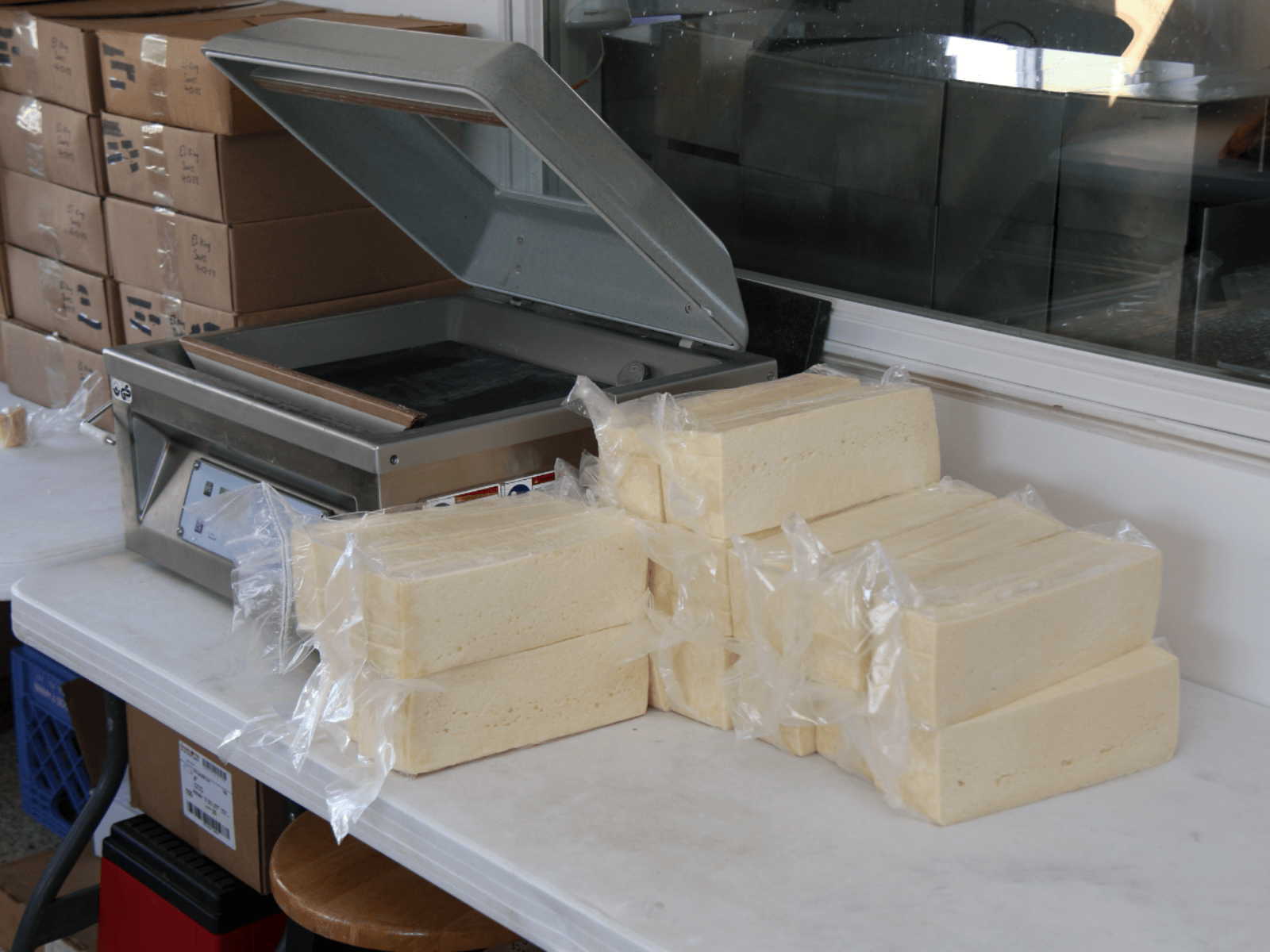
The Cheese is Packaged and ShippedFinally, the cheese is cut and packaged and shipped directly to your door! We’ve made this part simple. All you have to do to enjoy raw, 100% grass-fed, A2/A2 cheese is to order it from our online store and it will show up in a cool box at your home, ready for you to enjoy all its benefits!
Ready For Some Real Grass-Fed Cheese?
At Swiss Villa, we are committed to traditional cheese making methods that have stood the test of time. Using milk from 100% grass-fed A2/A2 cows on small Amish family farms in Pennsylvania, we bring the quality and heritage of Amish cheese Pennsylvania families have trusted for generations straight to your door.